

Werkstudent (m/f/d) im Bereich
Erweiterte Herstellerverantwortung (EPR)
Standort: München | 10-20 Std./Woche | Hybrid möglich | Start: ab sofort
Standort: München | 10-20 Std./Woche | Hybrid möglich | Start: ab sofort
Location: Munich, Germany | Start: as soon as possible

Who is legally responsible for WEEE obligations when products enter the UK market through international supply chains?
Recent clarifications to the UK WEEE producer definition are changing how responsibility is assigned.

Under Regulation (EU) 2025/40, packaging labelling will become a prerequisite for market access.
A roadmap for businesses to prepare effectively.

As the volume of battery waste continues to rise, recycling systems are facing increasing complexity due to the wide variety of battery chemistries, formats and product designs. Find out how AI can help.

Following the recent transformation of battery and packaging legislation into new European regulatory frameworks, the focus of the European Commission is now shifting to the WEEE Directive. The goal is to critically evaluate and modernise the framework.

The harmonisation of waste sorting labels under the PPWR marks an important step toward a more coherent and effective European recycling system. With the technical proposal developed by the Joint Research Centre (JRC), the focus is on standardising pictograms, colour schemes, and clear instructions for packaging and collection bins.
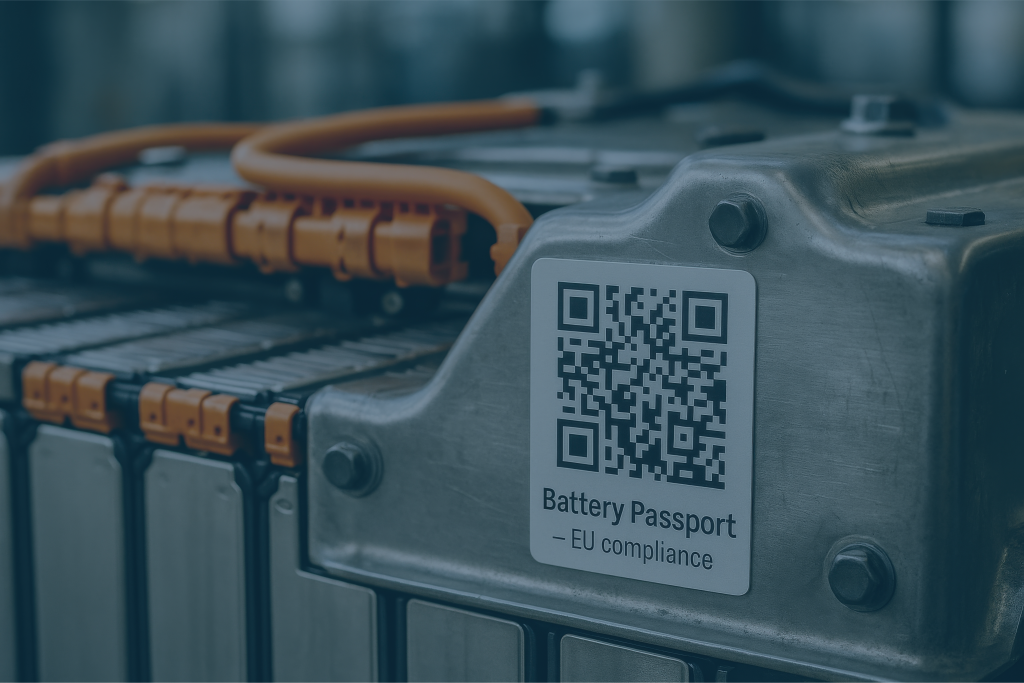
What appears at first glance as a data tool, is in fact a structural intervention – one that will redefine how responsibilities are assigned, tracked, and enforced, particularly at end-of-life.

The symbol embeds the principles of the circular economy directly in the product. By influencing user behaviour at the end of a product’s life, it helps to ensure that materials are returned to recovery and recycling processes instead of being lost.

Regulatory requirements for batteries have fundamentally changed. Since January, the new EU Battery Regulation has been reshaping compliance across Europe – and manufacturers and distributors need to rethink their reporting structures.